


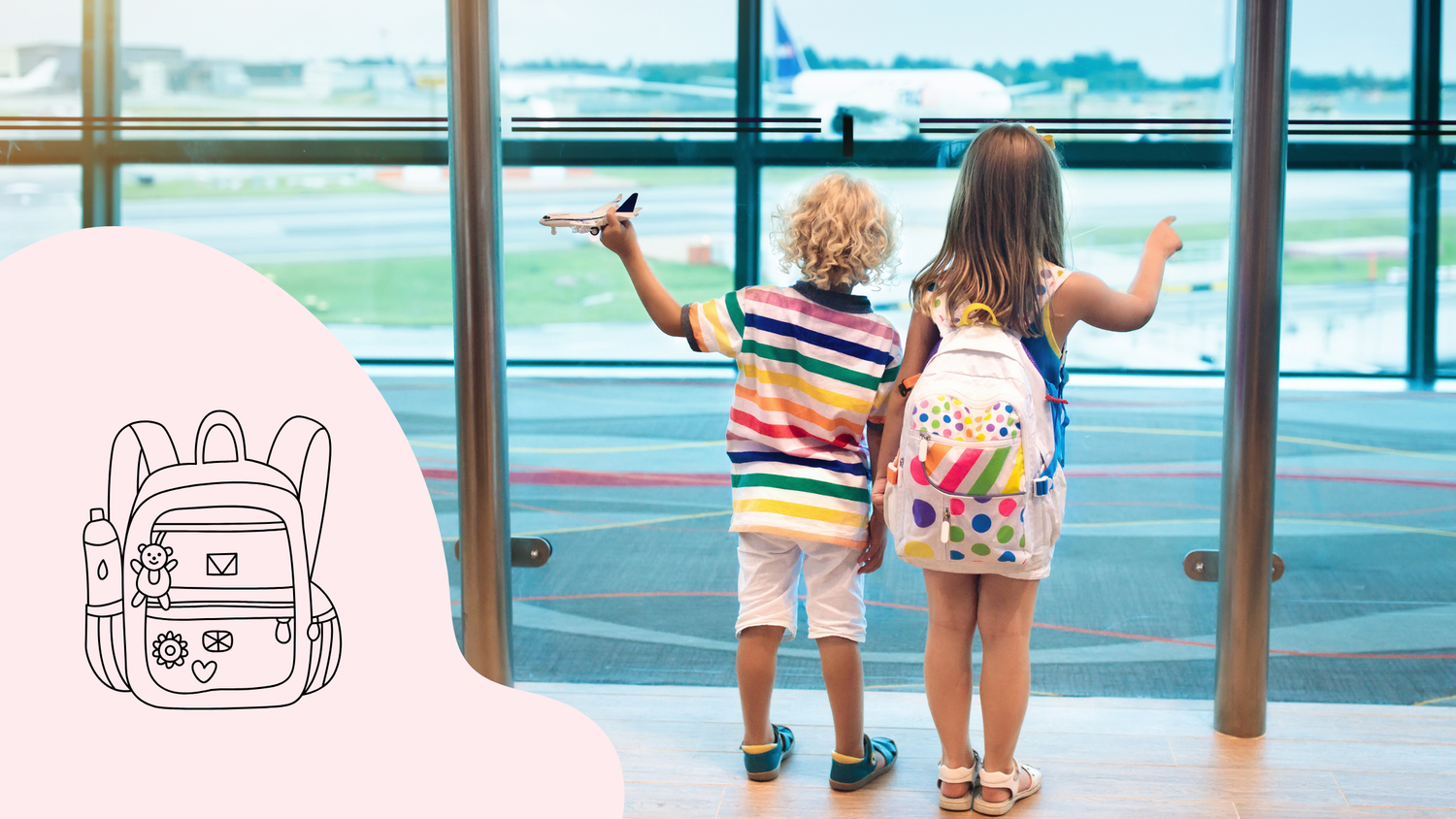
The most critical moment on a flight with a toddler is often not takeoff. It's minute 47, when the snack is already eaten, the picture book is on the floor, and your child suddenly decides that now is exactly the right time to be loud. That's when you find out if a good travel toy is suitable for the airplane – or if it just looked nice in the nursery.
Because for the airplane, you need different travel toys than for at home. It should be quiet, take up little space, not roll under the seat row in 14 individual pieces, and ideally keep your toddler engrossed for longer than three minutes. Sounds like an impossible wish list, but it's not. If you keep a few things in mind, flying with a toddler won't be magically relaxed – but often much more manageable.
The right travel toy for the airplane in brief: Good airplane toys for toddlers are quiet, compact, and don't require many small parts. Activities that engage the hands – opening, closing, inserting, sorting – and that your child can use immediately without explanation work best. Two to four different items are usually enough for the entire flight.
What makes a good travel toy for toddlers on an airplane
On an airplane, practicality is paramount. Toys there shouldn't just be "beautiful" or "educationally valuable." They must function in a confined environment, with little freedom of movement, many stimuli, and a child who quickly switches between curious, tired, and completely overwhelmed.
Particularly helpful are travel toys that occupy the hands and offer clear, small tasks. Toddlers love repetition. Opening, closing, pulling, inserting, turning – these actions provide structure when everything else is unfamiliar. Additionally, quiet play is golden on a plane. Anything that flashes, beeps, or rattles usually annoys not only others but eventually yourself.
It's also important that the toy works without much explanation. You don't want to have to give instructions, sort parts, or set something up. Ideally, your child can start immediately, even when you're busy with your seatbelt, water bottle, and boarding pass.
Which travel toys are suitable for the airplane? These types really work
Not every good toy is automatically travel-friendly. For flying, formats that are compact and offer many small play opportunities prove particularly useful.
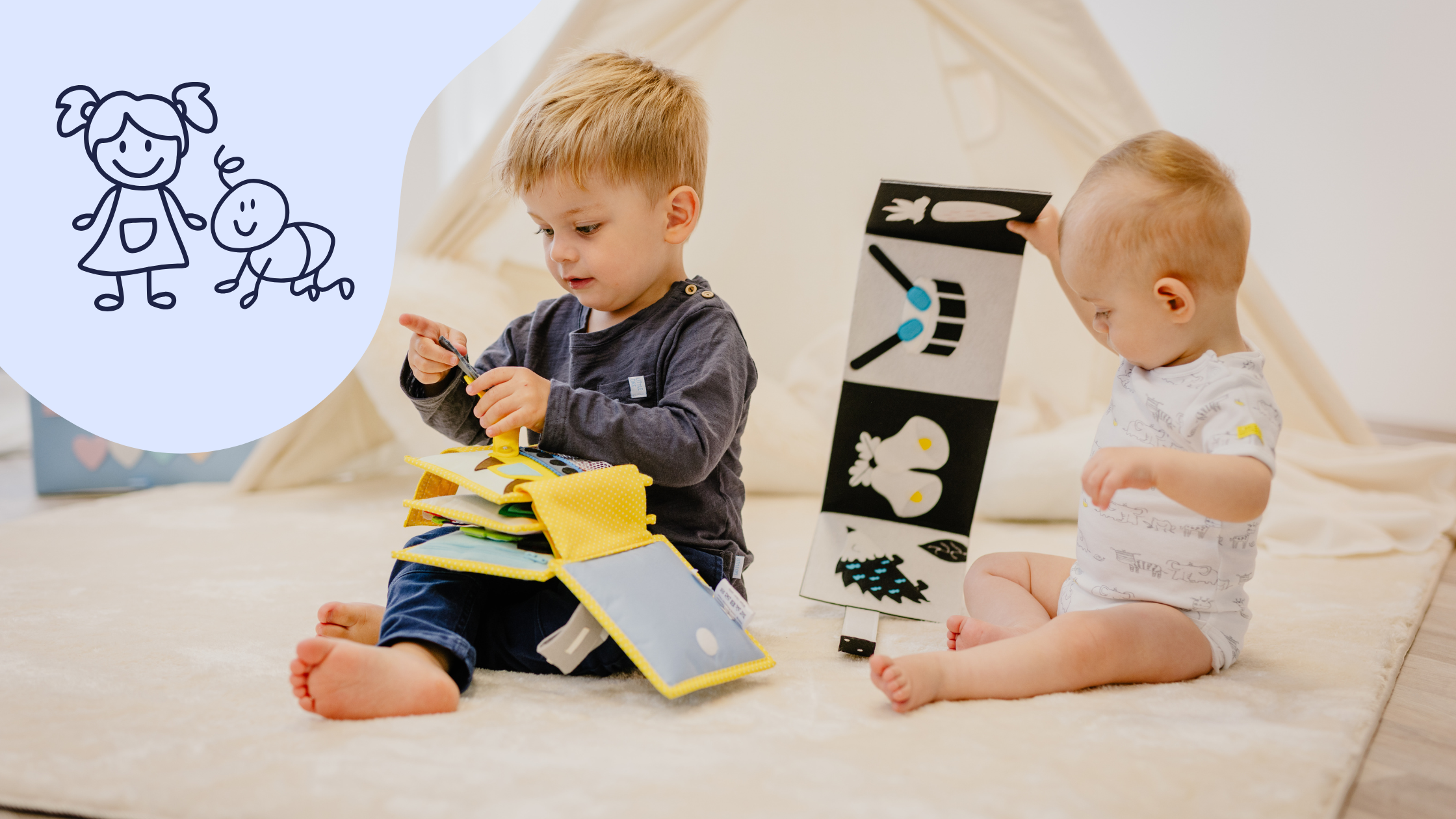
Fabric toys with interactive elements are often surprisingly practical. If your child can open zippers, move buttons, match figures, or explore small pockets, they often stay engaged longer than with a classic toy with only one function. This is especially strong for toddlers because they don't have to "play as intended." They simply experiment – and that's exactly what holds their attention.
Our Travel Buddies are designed precisely for this situation: compact fabric books for hand luggage, quiet, without loose small parts – there are even airplane designs. A soft companion instead of 14 individual parts that roll under the seat row.
Reusable sticker books or simple magnetic games can also work well on an airplane. The catch: they don't suit every age, and not every child stays calm with them. Some toddlers love sticking things on and peeling them off again. Others throw all the pieces into the footwell after two minutes. So it really depends on the temperament.
Small books are also helpful, but more as an addition. A cardboard book alone rarely lasts an entire flight. In combination with a more versatile activity toy, however, it can be just the right distraction when the mood shifts.
Toys with many loose individual parts, hard electronics, or loud sounds are less suitable. What is exciting at home quickly becomes a stress factor on the plane. You don't want anything you have to collect in the dim light under the seat in front.
Why open-ended play is better than a "cool" gimmick
Many travel gadgets seem brilliant at purchase and are done after ten minutes. A button that flashes. A figure with one function. A mini-game with a fixed sequence. The problem is not that such things are bad – they are just often "played through" too quickly.
More open-ended formats usually last longer because your child can decide what to do with them. Today, a zipper is opened and closed ten times, later a figure is hidden, then something is sorted again. These small repetitions seem unspectacular to adults, but for toddlers, they are just right. Not overwhelming, not too loud, not too much.
How to pack travel toys for the airplane smartly
The greatest help is not necessarily more toys, but the right timing. If everything has already been unpacked at the gate, the allure is often lost in the air. Deliberately save one or two things for the flight. It doesn't have to be new. "Haven't seen it in a long time" is often completely sufficient.
Don't pack the entire selection in the overhead compartment in your hand luggage, but in a small, easily accessible bag under the seat. If your child gets restless, you need immediate access. Everything else is theory.
A rotation of short phases has also proven effective. First something to look at, then something to fiddle with, then a snack, then activity again. Not because you need a minute-by-minute plan, but because toddlers often react better to transitions than to a single wonder item that is supposed to save everything.
How many toys should I pack in my hand luggage?
Too much choice can be more of a hindrance on the go. Two to four good activities are often completely sufficient if they function differently. A single toy for the entire flight is risky. But so is half a suitcase full of options.
If you are unsure, don't think in categories like "educational" or "particularly popular," but in real travel situations: What can my child do while buckled in? What works even when tired? What doesn't constantly fall down? These questions usually lead you to the right choice faster.
What to look for when buying
Material is more important on the go than you might initially think. Soft, light toys are usually more pleasant on an airplane than hard plastic solutions. They make less noise, are easier to store, and don't bother you even if they land on your lap or seat.
Also pay attention to the size. Too small is impractical because parts can get lost or be swallowable. Too big blocks the table and is annoying when packing and unpacking. Ideal are compact formats that fit into a handbag or backpack and still offer enough surface area to explore.
Care also plays a role. Air travel is sticky. A cookie lands on the toy here, a juice stain there. If a product is easy to wipe clean or uncomplicated to wash, you will greatly appreciate it later.
And then there's durability. Especially travel toys are rarely treated gently. They are stuffed, pulled, dropped, and frantically yanked out of bags. If seams, fasteners, or materials can't withstand that, the best idea is useless.
And if a part does get lost on the go – a figure, a small button – it's very valuable if you can reorder individual parts instead of buying everything new. With us, this is possible via the spare parts service. A lost piece doesn't have to be the end of a beloved companion.
From what age are travel toys suitable for the airplane?
With toddlers, even six months makes a big difference. A child around one year old often still engages strongly through simple cause-and-effect actions: opening, closing, pulling, feeling. At two or three years old, role-playing, matching, and small tasks become more prominent.
That's why it's worth looking not just at the age recommendation, but at what your child currently enjoys repeating. Does it love fasteners, small hiding places, figures, sorting, or naming? That's often a better indicator than any packaging.
If you're looking for something that's not just useful for this one flight, but also later in a restaurant, on a train, or in a waiting room, growing activity toys are particularly practical. That's exactly why many parents like textile, interactive formats so much. They don't feel like a disposable purchase, but like something that lasts. That's exactly what our Travel Buddies are for: today's flight, next week's restaurant visit, the waiting room in autumn. A companion that travels with you, instead of disappearing into the toy box.
What is often underestimated: Your child doesn't need constant entertainment
That takes the pressure off. Flying with a toddler doesn't mean filling every second. You don't have to stage a perfect flight. Boredom, looking around, cuddling, a bit of whining, and calming down are all part of it. Good travel toys don't replace every need. They just create small islands where your child is busy and you can catch your breath for a moment.
That's exactly why the selection is so worthwhile. Not because everything will go smoothly. But because you make those moments easier where things can quickly get hectic. If a toy is quiet, tangible, and familiar, a strenuous flight may not become a dream trip – but often a flight where you eventually think: okay, that went better than expected.
So, if you're looking for travel toys for a toddler on an airplane, don't buy the loudest, newest, or supposedly indispensable one. Choose what really occupies small hands, creates little chaos, and still feels good in row 18 by the window. Such things are suddenly worth more on the go than any optimistic packing list.
Frequently Asked Questions about Travel Toys for Airplanes
Which travel toy is best for the airplane?
Quiet, compact activities without many small parts work best – for example, interactive fabric toys with zippers, buttons, and small pockets. They engage the hands, require no explanation, and don't roll under the seat row.
How do I keep my toddler busy on the plane without a screen?
Focus on motor activities that your child can control themselves: opening, closing, inserting, hiding. Alternate in short phases between looking, fiddling, and snacking – and consciously save one or two things for the flight so that the appeal isn't lost at the gate.
How many toys should I pack in my hand luggage?
Two to four different activities are sufficient for most flights. More important than the quantity is the variety: items that function in different ways last longer than half a suitcase full of similar toys.
From what age are travel toys for the airplane useful?
As early as about one year old, when children love simple cause-and-effect actions. At two to three years old, matching and small role-playing are added. Focus less on the age recommendation and more on what your child currently enjoys repeating.
Is fabric toy suitable for the airplane?
Yes, even particularly good. It's quiet, light, easy to store, and withstands being stuffed into hand luggage. Interactive fabric books also offer multiple activities in one – ideal for the confined space on the plane.

Leave a comment
All comments are moderated before being published.
This site is protected by hCaptcha and the hCaptcha Privacy Policy and Terms of Service apply.