


Montessori Toys for Baby: The Honest Age-Based Guide
Anyone looking for good Montessori toys for their baby quickly realizes the big difference between clever marketing and truly meaningful play materials. Especially in the first months of life, a baby doesn't need much – but they need the right things. Fewer stimuli, clear shapes, authentic materials, and play opportunities that suit their development often achieve more than loud effects and blinking distractions.
What Defines Montessori Toys for Babies
Montessori-oriented baby toys do not aim for quick entertainment. They support the child in becoming active themselves, observing, grasping, repeating, and understanding their environment with all their senses. The focus is not on the toy itself, but on what the baby can discover with it.
In practice, this means: a good play material is simple, accessible, and not overstimulating. It gives the baby a clear task or stimulus without giving everything away. A grasping toy can feel exciting in the hand, a contrast card can captivate the gaze, a cloth book can invite touching, feeling, and recognition. This is precisely where Montessori's strength lies – screen-free play becomes real learning because the child takes the main role.
Many parents immediately expect wooden toys when they hear Montessori. Wood can be wonderful, but it's not the only way. For babies, soft, high-quality fabric materials are often particularly practical for everyday use because they are light, safe, and comfortable to grasp. What matters less is the material alone than whether the toy is designed to be calm, meaningful, and developmental.
Choosing Montessori Baby Toys by Age
Not every toy sold as "from birth" truly fits the respective developmental stage. Especially in the first year, a baby's interests change very quickly.
0 to 3 Months – seeing, hearing, orienting
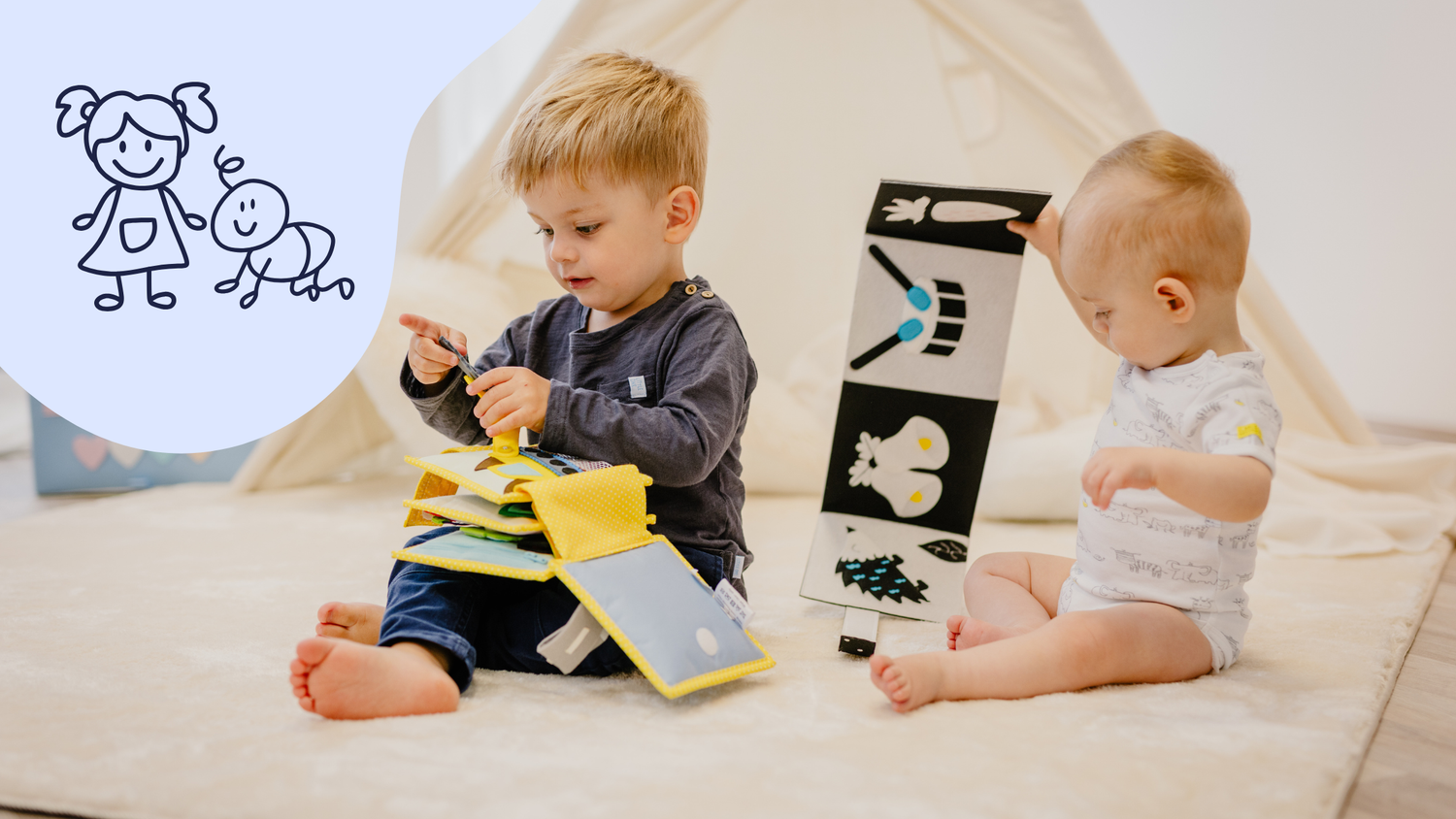
In the first few weeks, it's primarily about perception. Babies see contrasts better than subtle color gradations and respond to simple, recognizable patterns. Black and white contrast cards, a high-contrast black and white cloth book, or soft fabric elements with clear surfaces can be very suitable here. This is exactly what our Black and White series is made for: clear contrasts from birth that captivate the gaze without overstimulating.
Less helpful are products that blink, play music, and rustle loudly all at once. This often seems varied to adults, but can quickly be too much for young babies. A calm stimulus that the child can look at repeatedly usually supports concentration better.
3 to 6 Months – grasping, holding, understanding cause and effect
As soon as babies start grasping objects more purposefully, grasping toys, light rattles, or textile toys with different surfaces become more interesting. Now the child begins to learn: If I move, something else moves too. If I press, it rustles. If I let go, it falls. A soft discovery ball provides exactly this first cause-and-effect experience – without five effects at once.
Montessori toys for babies in this phase should enable precisely such experiences without overdoing it. A well-designed fabric toy with a clear function often promotes more than a product with five effects at once.
6 to 12 Months – examining, repeating, acting independently
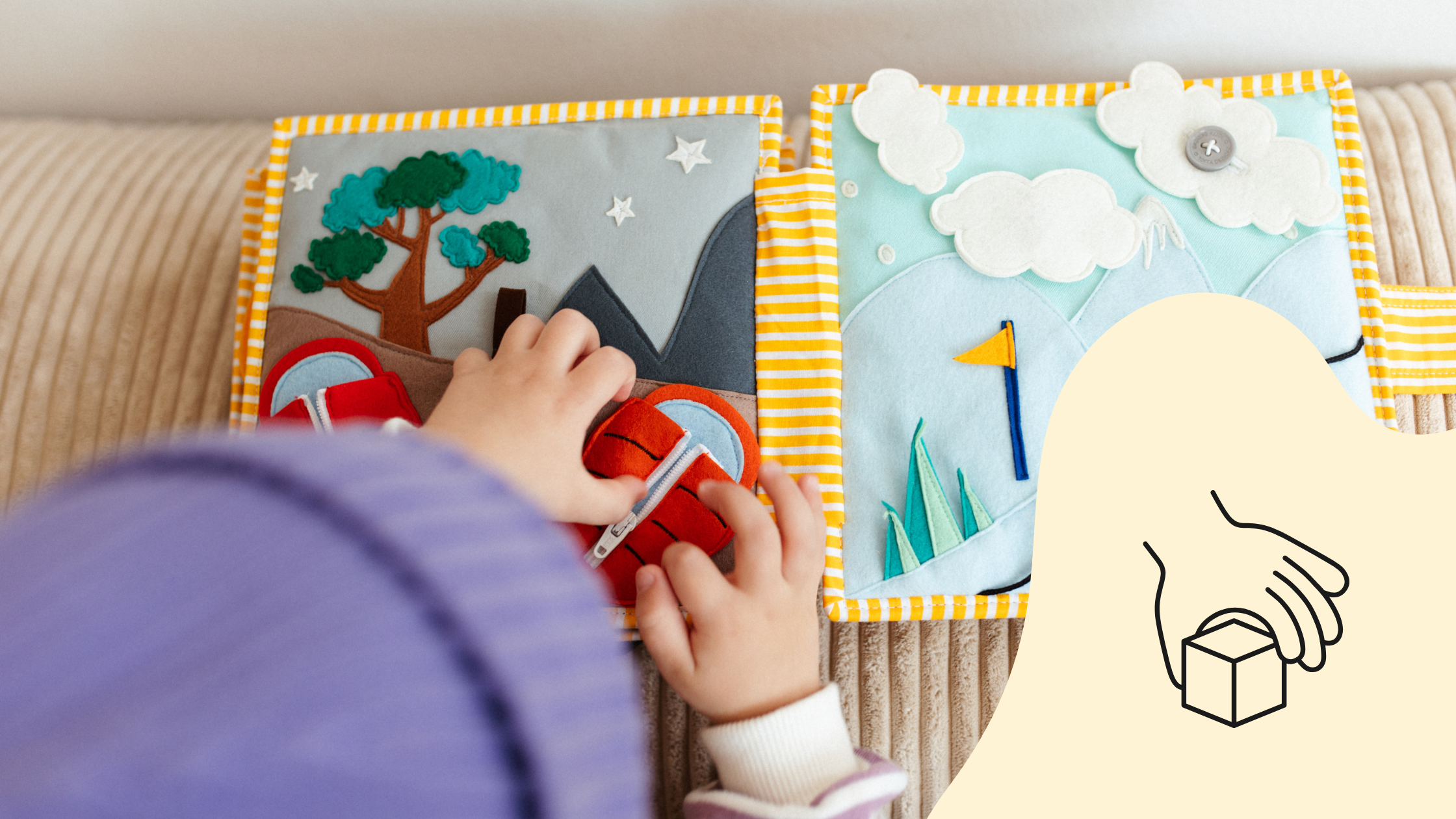
In the second half of their first year, babies want to examine things more closely. They turn objects in their hands, look for details, open flaps, pull elements, or put things in and take them out again. Now, simple activity toys, soft books, first sorting ideas, or everyday sensory materials are particularly valuable. A Mini Quiet Book bundles precisely such stimuli on a few felt pages: flaps to open, elements to pull, shapes to sort – a thoughtfully designed cloth book that gradually reveals new possibilities.
It is important that the toy allows for feelings of success. Tasks that are too complicated quickly lead to frustration, while those that are too simple quickly lose their appeal. Good products grow with the child by offering multiple uses.
How Parents Recognize Good Montessori Toys
The first glance should not be at colors or trends, but at the play idea. If you ask yourself: What can my baby do here independently, a clear picture often emerges quickly. Can it observe, grasp, touch, pull, discover, and repeat? Or does it primarily remain a spectator?
Another good sign is clarity. If a toy offers too many functions at once, it often becomes chaotic. Babies usually benefit more from individual, understandable stimuli. A ring to grasp, a tab to pull, a surface to feel – that's often completely sufficient.
The craftsmanship also deserves attention. Especially with baby toys, safe seams, pleasant surfaces, low-pollutant materials (such as OEKO-TEX certified fabrics), and a shape that small hands can truly grasp are important. High-quality craftsmanship is not just a matter of appearance, but also makes everyday family life a little easier because toys remain beautiful, safe, and usable for longer.
Wood, Fabric, or Silicone – What Really Fits?
There's no rigid right or wrong here. It depends on the age, the place of use, and the child. Wood often appears particularly minimalist and high-quality. At the same time, for very young babies, it can sometimes be heavier, colder, or a bit impractical in everyday life, for example on the go or while cuddling on the sofa.
Fabric toys are soft, light, and versatile. Especially for first sensory experiences or quiet activities on the go, they can be a very good choice. If fabric elements are clearly designed and not overloaded with stimuli, they fit very well into a Montessori-inspired environment. That's why many parents consciously choose textile Quiet Books or sensory fabric toys that encourage independent discovery and yet remain gentle.
Silicone can be useful, for example for teething rings or grasping elements. Here, too, the simplicity of the shape and the quality of the material are important. Not every modern material contradicts Montessori. The benefit for the child always remains the deciding factor.
Typical Misconceptions About Montessori Baby Toys
A common misconception is to confuse Montessori with particularly expensive or extremely minimalist design. Expensive alone doesn't promote anything. And minimalist is only useful if the play material actually offers something to the baby's developmental stage.
Just as often, toys are bought too early. Parents then choose products that will only become interesting months later, while the baby currently needs completely different stimuli. This easily leads to toys remaining unused, and parents thinking their child simply isn't interested. In reality, it's often just the timing that's off.
The quantity also plays a role. A basket full of options sounds practical, but quickly overwhelms babies. A few well-selected materials that are visible and accessible often promote more concentration and initiative than a large selection.
How to Integrate Montessori Toys into Everyday Life
Montessori doesn't begin with a perfectly furnished nursery. It begins with a calm, accessible environment. Place one or two suitable play offerings where your baby is actively awake – on a mat, next to the mirror, or in a low, easily accessible play zone.
Then observe instead of immediately intervening. Many parents find that their baby engages longer and more concentratedly if new things aren't constantly offered. Repetition is not a sign of boredom, but a central part of learning.
Everyday transitions are also well-suited for meaningful play materials. While waiting, traveling, or during quiet moments before bedtime, simple sensory fabric toys or small activity books often help better than loud distractions. A Travel Buddy fits in any bag and keeps them occupied at a restaurant or in the car; a Calmi Cube provides calm stimuli for in-between moments. They keep them busy without over-exciting them.
How Much Montessori Does a Baby Really Need?
The honest answer is: not as a label, but as an attitude. Your baby doesn't need a complete collection of "right" materials. They need adults who pay close attention, take development seriously, and create an environment where independent discovery is possible.
Therefore, a small, thoughtful assortment can be completely sufficient. A contrast product for the first period, a good grasping toy, a soft sensory cloth book, and later a first activity toy often cover a lot. If products address several developmental areas and remain calm, it is usually more valuable than constant replacement.
For many families, this balance is crucial: toys should encourage, but not add stress. They should be beautiful, but above all meaningful. They should take the child seriously and relieve parents in everyday life. At Jolly Designs, we therefore consciously focus on thoughtful, Montessori-inspired fabric toys that support development without overstimulating.
Ultimately, a good baby toy isn't the loudest, brightest, or trendiest. It's the toy your child returns to again and again – because they find something in it that they genuinely want to learn right now. Toys come and go – but this one remains.
Frequently Asked Questions About Montessori Toys for Babies
When are Montessori toys suitable for babies? From birth – but age-appropriate. In the first few weeks, calm contrasts (e.g., a black and white cloth book) are ideal, from about 3 months grasping toys, from 6 months first activity books like a Mini Quiet Book.
Do Montessori toys have to be made of wood? No. Wood is popular, but not the only option. Soft, high-quality fabric toys are often more practical for babies in everyday life – light, safe, and pleasant to grasp. The crucial factor is that the toy is designed to be calm and developmentally stimulating.
Is a cloth book Montessori-appropriate? Yes, if it is clearly designed and invites independent discovery – touching, pulling, opening, repeating. A good cloth book bundles several stimuli in one place without overstimulating.
How many Montessori toys does a baby need? Less than you might think. A small, thoughtful assortment – a contrast product, a grasping toy, a sensory cloth book, and later an activity toy – is often completely sufficient. A few easily accessible materials promote concentration more than a large selection.
Discover our Montessori-inspired fabric toys – from the black and white series from birth to the Quiet Book that grows with your child.

Leave a comment
All comments are moderated before being published.
This site is protected by hCaptcha and the hCaptcha Privacy Policy and Terms of Service apply.