


Why doesn't my child play alone? And how you can gently support them
In brief
- Independent play is not a given – it must be learned.
- Realistically, at 1 year old it's a few minutes, at 3 years perhaps 15–20. Anything more is a bonus.
- Most common obstacles: too many toys, constant interruptions, lack of security.
- The most effective trick: stay nearby, but don't play along.
Do you know that thought? "Why does my child always need me to play?" You're loading the dishwasher – and after 90 seconds, a little person stands next to you, wanting to be entertained.
You are definitely not alone in this. And the most important message first: You are not doing anything wrong, and your child is not "too clingy." Independent play is not a characteristic one has or doesn't have – it is a skill that children gradually develop.
How long do children actually play alone?
This is where the biggest misunderstanding lies. Many parents have completely unrealistic expectations – and then get frustrated. As a rough guide:
- Around 1 year old: a few minutes, often only as long as you are in sight.
- At 2 years old: perhaps 5 to 10 minutes at a time.
- At 3 years old: often 15 to 20 minutes, if conditions are right.
- At 4 to 5 years old: longer, more focused play phases become possible.
Every child is different, and these are not targets. But if your two-year-old comes back after ten minutes: that's not a failure. That's normal.
Why many children don't want to play alone
There are very natural reasons for this:
Your child seeks closeness and security. Before children can venture out, they need to feel emotionally secure. Those who are currently experiencing a change (starting daycare, new sibling, moving) often cling more.
Independent play must first be learned. If they've mostly played together until now, your child might simply not know how to do it alone.
Too many stimuli are overwhelming. An overflowing toy basket often leads to children jumping from one thing to another instead of engaging deeply. More on this in How much toy does a child need?
Some children simply love connection. And that's perfectly okay. Independence doesn't come from pressure.
The three most common obstacles – and what helps instead
1. Too much choice. Put half of it away. Fewer, well-chosen items lead to longer, more focused play than a full basket.
2. Constant interruption. We mean well: "Look, this is how you do it!" or "Well done!" But every intervention pulls your child out of their concentration. If they are playing intently – let them be. Even praise can wait.
3. Leaving too soon. If you disappear as soon as your child starts playing, you teach them: playing means Mom is gone. Better: stay nearby at first, then slowly increase the distance.
How to build independent play step by step
✨ 1. Create a quiet play area. A small, cozy area with a few selected toys helps children concentrate.
✨ 2. Offer open-ended play materials. Items without a "right solution" are particularly suitable. Our Quiet Books are designed precisely for this: a clear task per page that your child can master independently – without anyone having to explain how it works. This self-sufficiency is key to independent play.
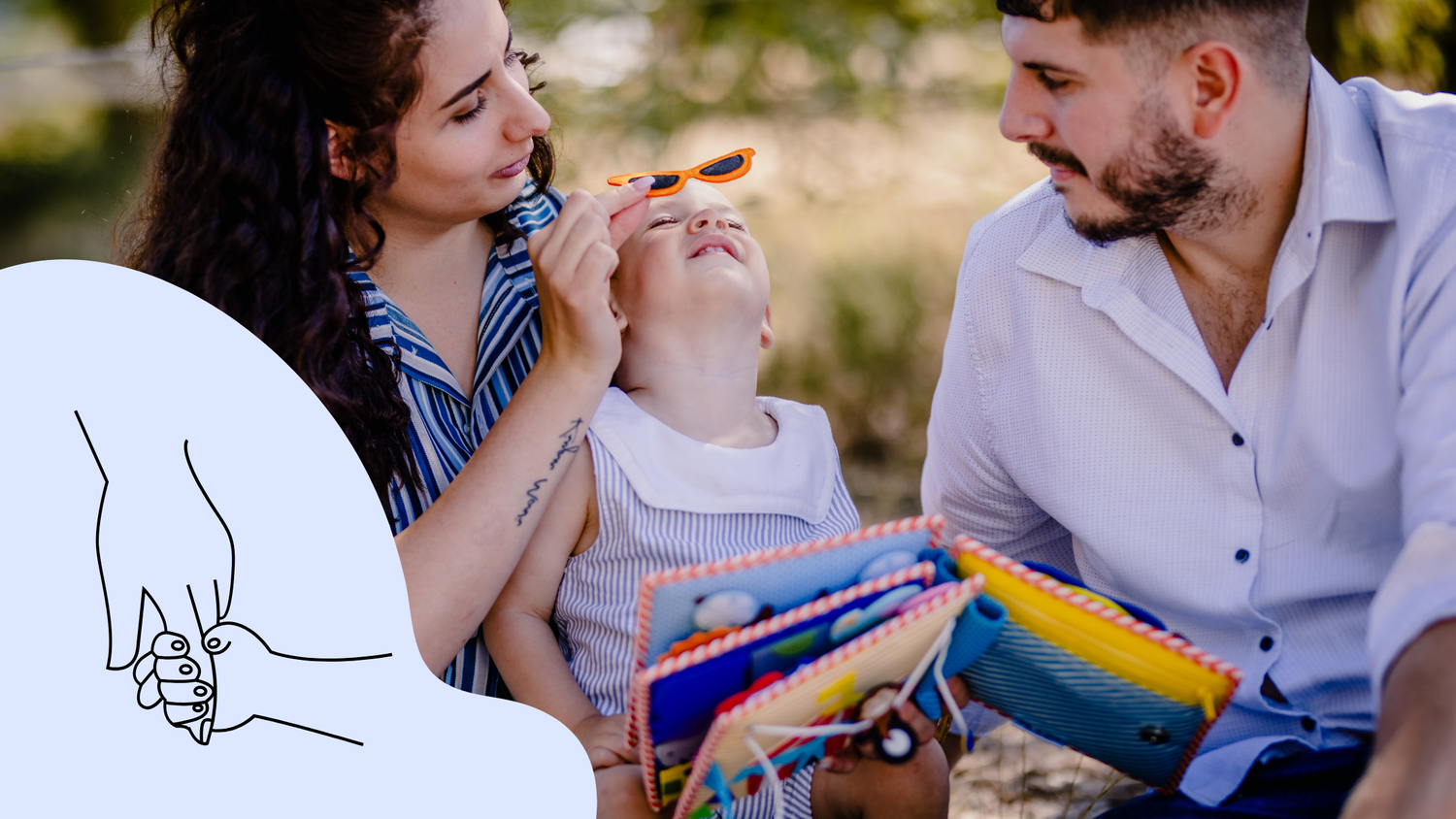
✨ 3. Accompany first, then slowly withdraw. At first, it's enough just to be nearby – on the sofa, with a book, without playing along. Your child feels: "Dad is here." This sense of security makes them brave enough to play independently. Later, you go to the kitchen for a moment. Then a little longer.
✨ 4. Introduce small routines. Even 5 to 10 minutes of independent play daily makes a big difference. Repetition creates habit – ideally always at the same time of day.
✨ 5. Don't jump in immediately. If frustration arises: wait a moment. Often, your child will solve it themselves – and that moment is worth more than any help.
Why the effort is worth it
Playing alone doesn't mean "being left alone." It means developing one's own ideas, becoming creative, solving problems independently, building concentration, and gaining self-confidence.
And honestly: it also means you get to drink your coffee while it's still warm. Both are important.
Frequent questions
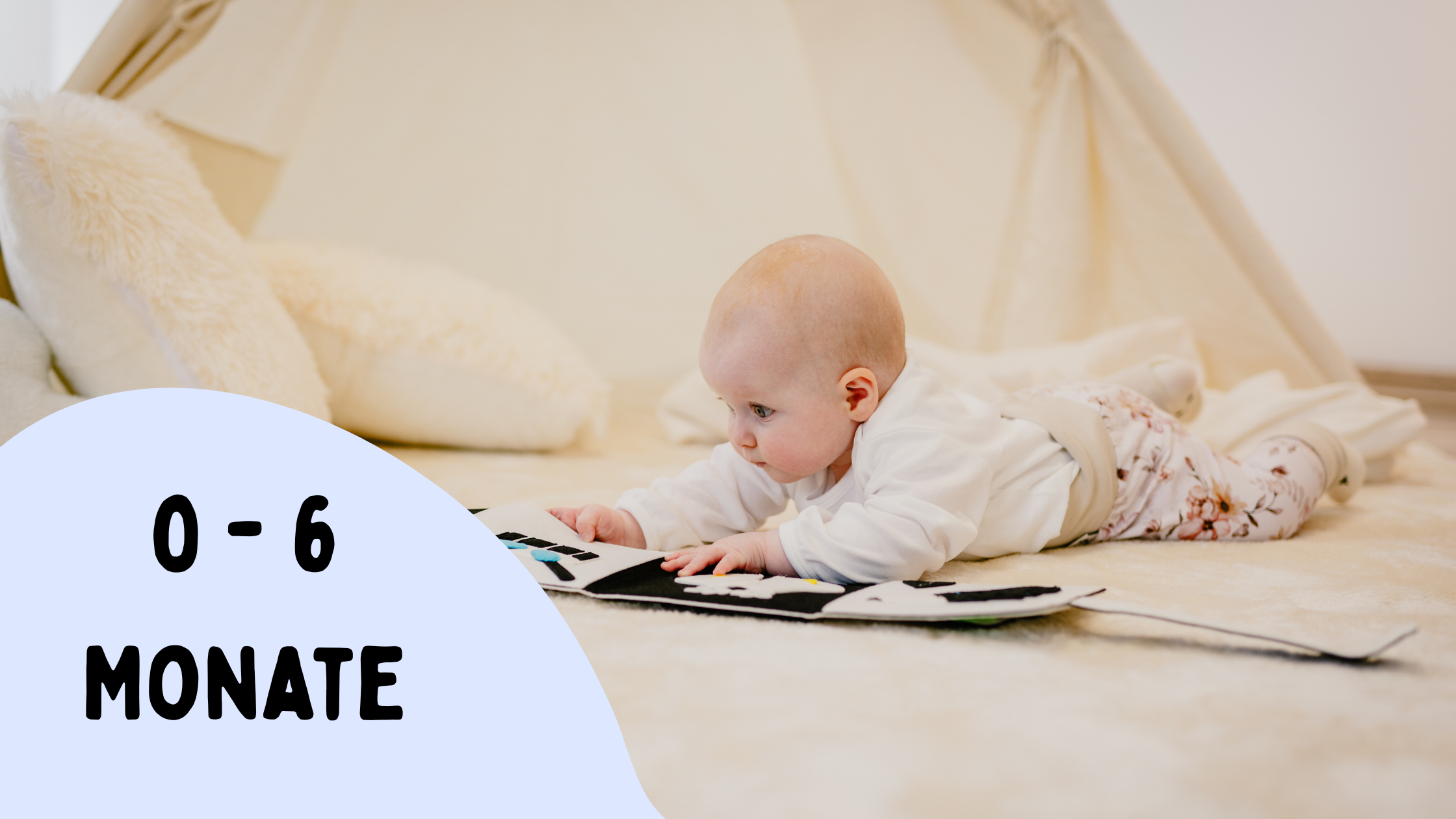
When can children play alone? First short phases of independent play often appear around one year of age – usually only for a few minutes and mostly only when you are in sight.
How long should a 2-year-old be able to play alone? Realistically, about 5 to 10 minutes at a time. More is great, less is not a problem.
My child can't entertain themselves at all – what should I do? Reduce the toys, initially stay nearby without playing along, and don't interrupt when they are focused. Build up independent play in small steps.
Is it bad if my child constantly seeks closeness? No. Children need security before they can venture out. Closeness is the foundation for independence, not its opposite.
Independence begins with trust. Our handmade Quiet Books are designed so that children can discover them all by themselves – at their own pace, without instructions, completely without a screen.

Leave a comment
All comments are moderated before being published.
This site is protected by hCaptcha and the hCaptcha Privacy Policy and Terms of Service apply.