

Fostering Language Development: How Children Learn to Speak – and How You Can Support Them
Few things are as exciting as a child's first real word. And few things raise as many questions: Is my child developing as they should be? Am I talking enough? Do I need to "practice" anything? Those who want to foster language development quickly realize it's both simpler and more relaxed than many think.
The good news first: You don't need a program or flashcards. Language primarily grows through what happens every day anyway – talking together, listening, and looking at things. Whether you're a mother, father, grandma, grandpa, or childminder: This article shows you how language develops and how you can support it effortlessly.
How Language Develops – A Rough Timeline
Every child has their own pace. This is for orientation, not a test plan:
- 0–6 Months: Cooing, babbling, first sounds. The child listens and "responds" with noises.
- 6–12 Months: Syllable chains like "dadada," reacting to their own name, first gestures like waving.
- 12–18 Months: First real words, often "Mama," "Papa," "there." Much is understood before it's spoken.
- 18–24 Months: Vocabulary explodes, first two-word sentences ("Mama there").
- 2–3 Years: Short sentences, many questions, rapidly growing vocabulary.
If you'd like to know more about this phase, you can find details in our article Child Development 12–18 Months.
The Good News: Language Promotion Happens Every Day
Children learn language not through instruction, but through relationship. They need someone to talk to them, respond to their sounds, and give them time to answer. That's why normal everyday life is the best "language school" – while getting dressed, shopping, eating.
The beauty of it: You can't do much wrong. Attention, genuine interest, and many shared moments are more effective than any learning toy with a button.
8 Simple Ways to Foster Language Development
- Narrate the day. Say what you're doing: "Now we're putting on the jacket." The child links words with actions.
- Talk at eye level. Eye contact and an attentive face make language tangible.
- Allow time for answers. After a question, wait briefly – even a sound or a gesture is an answer.
- Don't constantly correct. If the child says "nana," simply reply correctly: "Yes, a banana!" This way, they hear the correct form without feeling corrected.
- Sing and rhyme. Songs and rhymes train rhythm, sound, and vocabulary – and are simply fun.
- Look at books together. Name pictures, ask questions, invent stories. More on this next.
- Real conversations instead of screens. Language develops through interaction. A screen talks, but it doesn't listen or react to your child.
- Pick up on their interests. Whatever your child is currently fascinated by is what they'll most eagerly learn new words about.
Why (Fabric) Books are So Powerful for Language
Of all the everyday ideas, looking at books together is one of the most effective – and one of the reasons why our fabric books are so important to us.
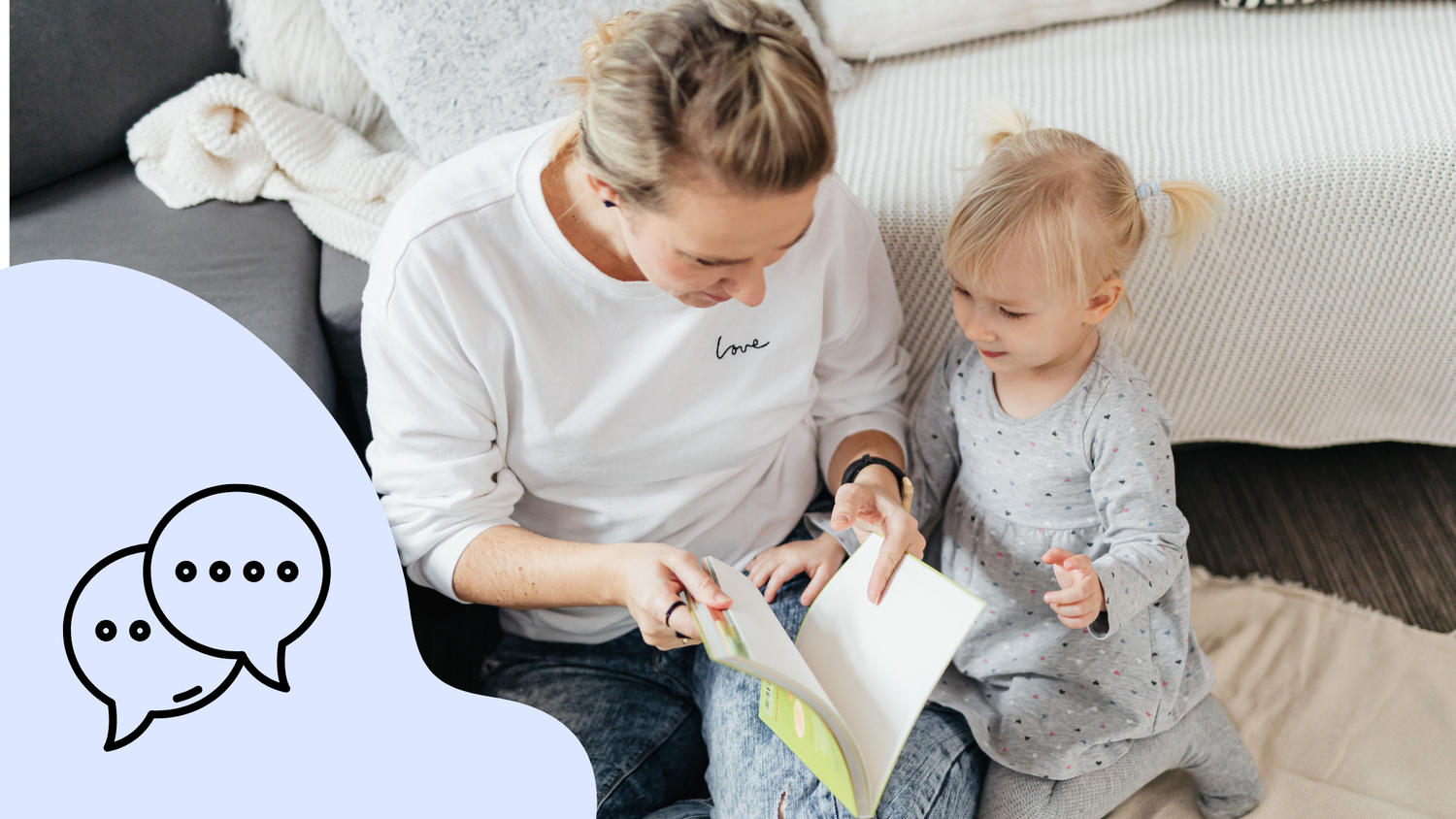
A book gives you both a reason to talk: "Where is the duck?", "What is the dog doing?", "What color is the apple?". Each page becomes a small conversation. With our Quiet Books, there's even more: finger puppets that "talk" to each other, flaps hiding things, and motifs to name and rediscover. This turns looking into a dialogue – and dialogue is exactly what makes language grow.
For the little ones, the handy Mini Quiet Books are ideal: small enough for little hands, big enough for a hundred little conversations. And because they are completely screen-free, your child gets exactly what they need to learn to speak – a real conversational partner instead of an audio track.
When Language Development is Slower – and When Support is Useful
Every child develops at their own pace, and late talkers often catch up. Nevertheless, there are times when a professional opinion is reassuring. Talk calmly with your pediatrician or a speech therapist if, for example, your child:
- at about 12 months, barely reacts to being spoken to or to noises,
- at around 24 months, still doesn't speak single words,
- or you generally feel that understanding is difficult.
This is no cause for concern, but simply the right way to gain certainty. Incidentally, our books were developed in collaboration with experts, including a speech therapist – because for us, good language promotion is not accidental, but well thought out.
Frequently Asked Questions about Language Development
How can I promote my baby's language development? By talking to them a lot, picking up on their sounds, singing together, and looking at books – ideally from the beginning and effortlessly in everyday life.
When should a child start speaking? First words often appear around the first birthday, full sentences usually between two and three years. The range is wide and individual.
Do books promote language development? Yes, very much so. Looking at and naming things together is one of the strongest language exercises of all – because it creates a real conversation.
Does screen time harm language development? Language develops through dialogue. A screen doesn't react to your child – therefore, talking together, reading aloud, and playing are significantly more effective.
Would you like to effortlessly support your child's language development? Discover our handmade fabric books – every page a little conversation, completely screen-free.

Leave a comment
All comments are moderated before being published.
This site is protected by hCaptcha and the hCaptcha Privacy Policy and Terms of Service apply.