


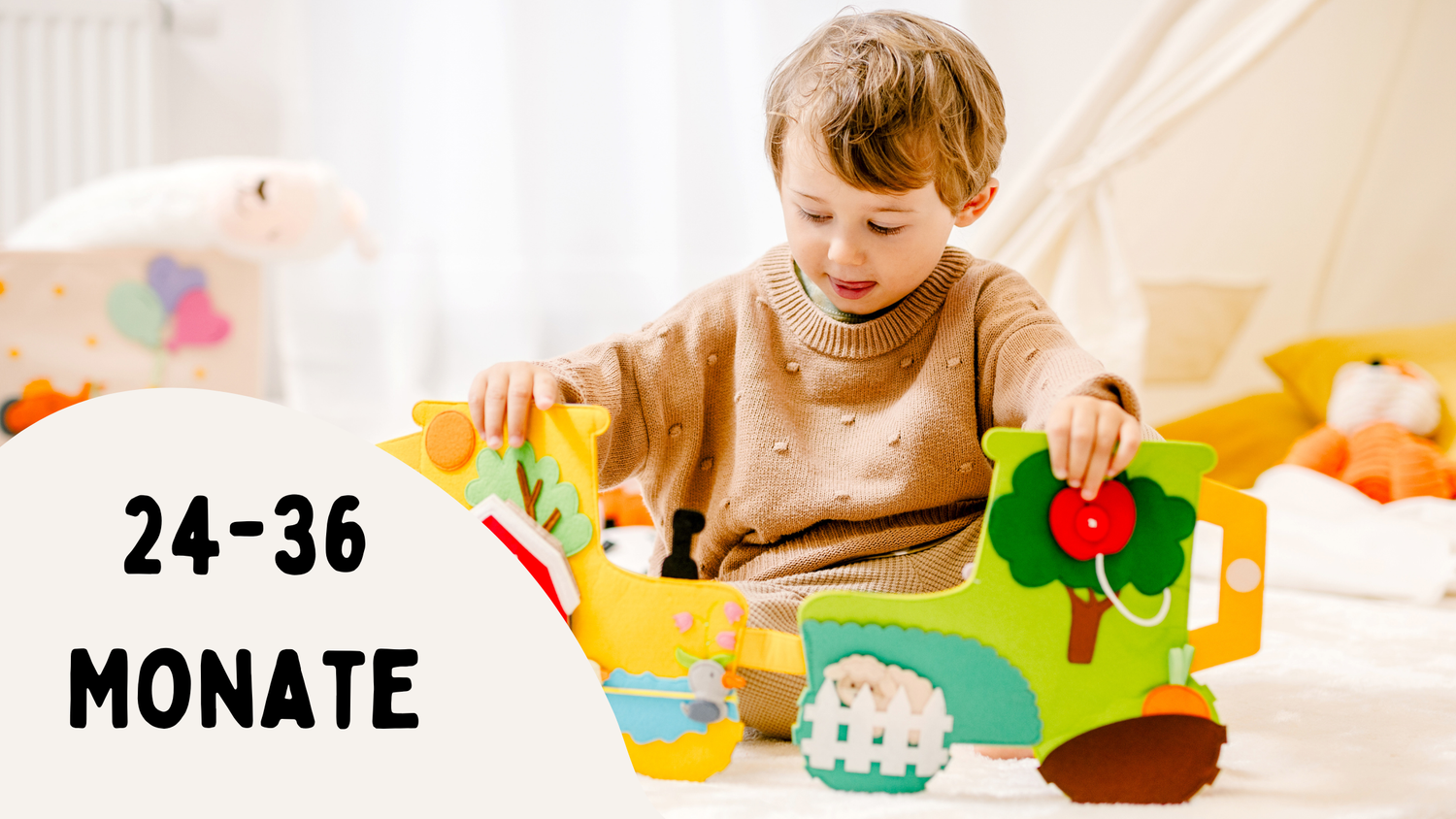
Child Development 24–36 Months: Understanding Everyday Life, Strengthening Independence
In brief
- Children now want to decide for themselves, act independently, and actively participate in everyday life.
- They understand routines, plan ahead, and reenact experiences.
- Vocabulary grows noticeably, sentences become longer.
- The strongest learning principle in this phase: being allowed to do things themselves.
Between the second and third year of life, children make great developmental strides. They want to decide for themselves, act independently, and actively participate in everyday life. Routines are understood, processes are questioned, and reenacted with growing self-confidence.
In this phase, thoughtful play impulses support your child's development by playfully fostering independence, fine motor skills, logical thinking, and everyday competencies.
What happens between 24 and 36 months?
Children now begin to grasp connections more consciously and link processes logically. They remember routines, plan small steps of action ahead, and show significantly more persistence in play.
Typical developmental steps in this phase include:
- purposeful buttoning, opening, closing, and tying
- reenacting everyday situations
- better understanding of sequences and processes
- growing vocabulary and longer sentences
- increasing concentration
- strong need for independence
Everyday life and play increasingly merge: children learn by reenacting experiences, varying them, and integrating them into their own world.
By the way: For many children, this time also marks the start of daycare or kindergarten. You can read how to gently accompany this transition in Settling into Kindergarten.
How learning toys meaningfully support development
Learning toys can now become more complex and incorporate real-life situations. Play offers that encourage children to master things themselves are particularly valuable.
Meaningfully designed learning toys support:
- Fine motor skills and dexterity
- Concentration and perseverance
- Logical thinking and planning
- Everyday independence
- Role-playing and social skills
Playful practice builds confidence – and strengthens trust in one's own abilities. Learn more in "I can do it myself!" – Gently fostering independence.
Recommendation for 24–36 months: Quiet Book "Hey You!"
The Quiet Book "Hey You!" playfully guides children through familiar daily routines. Brushing teeth, getting dressed, bathing, shopping, or washing clothes come alive and are tangible here – right where children are at their developmental stage.
The special feature: Your child can choose their favorite character and customize the book. With strings, buttons, zippers, and small pockets, they discover different everyday situations and become actively involved.
The book playfully promotes:
- Fine motor skills and dexterity
- Concentration and logical thinking
- Everyday independence
- Self-confidence through familiar routines
By reenacting familiar routines, children gain confidence and joy in mastering everyday challenges independently.
Simple play ideas for 24–36 months
1. Reenact everyday life. Brushing teeth, getting dressed, or shopping are reenacted step by step and named. Promotes: Understanding of everyday life, language, independence.
2. Recognize sequences. "What comes first?" – your child orders processes and explains them in their own words. Promotes: Logical thinking, concentration, memory.
3. Let them do it themselves. Close buttons, open zippers, or thread strings – without time pressure. Promotes: Fine motor skills, patience, self-confidence.
The most important thing at the end
In this phase, children want to understand and shape everyday life themselves. Playful practice strengthens their confidence – and makes them more independent step by step.
The most important contribution you can make is often the hardest: waiting a moment longer before you help. Because "I did it myself" is the most beautiful feeling a child can experience at this age.
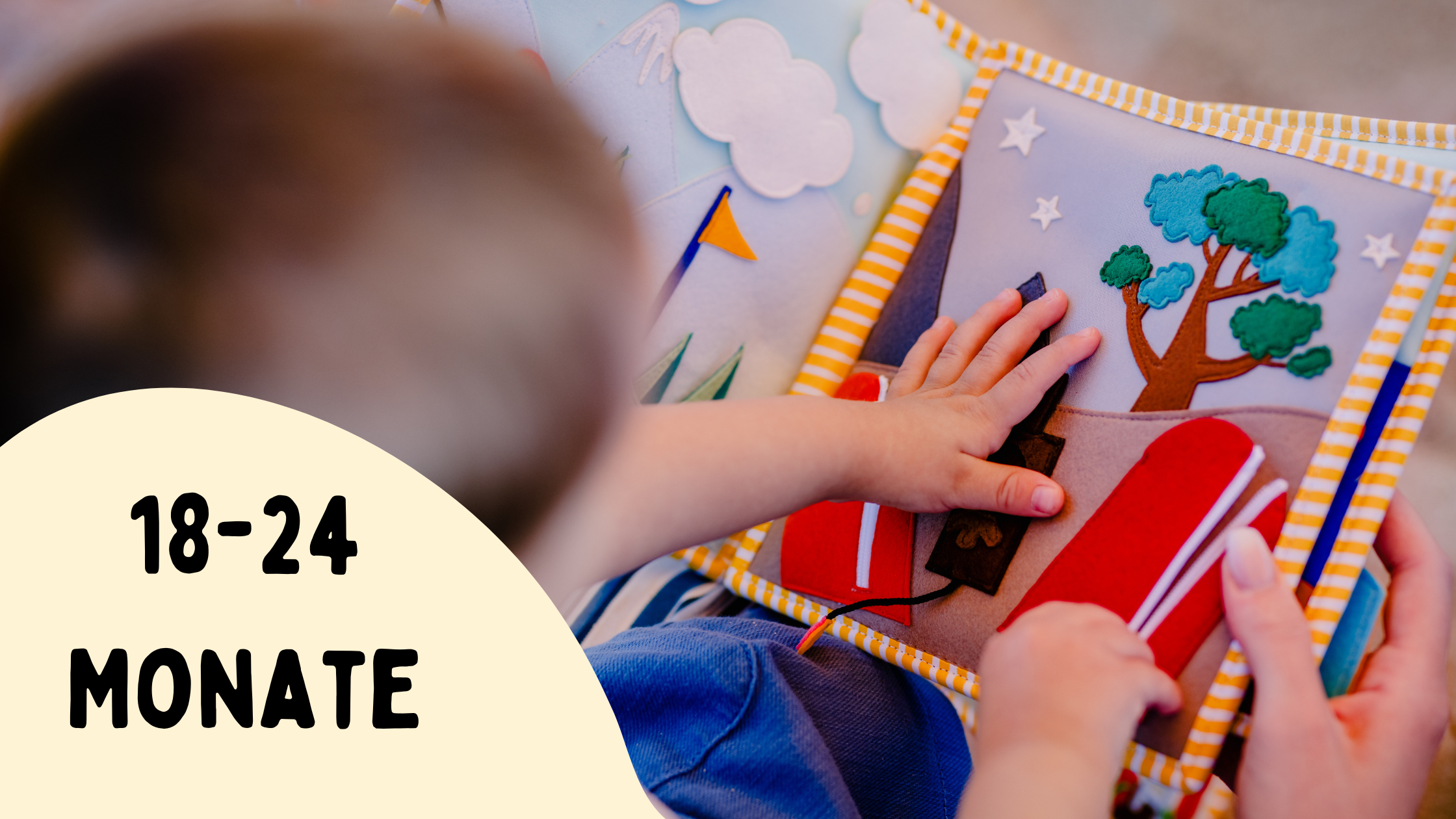
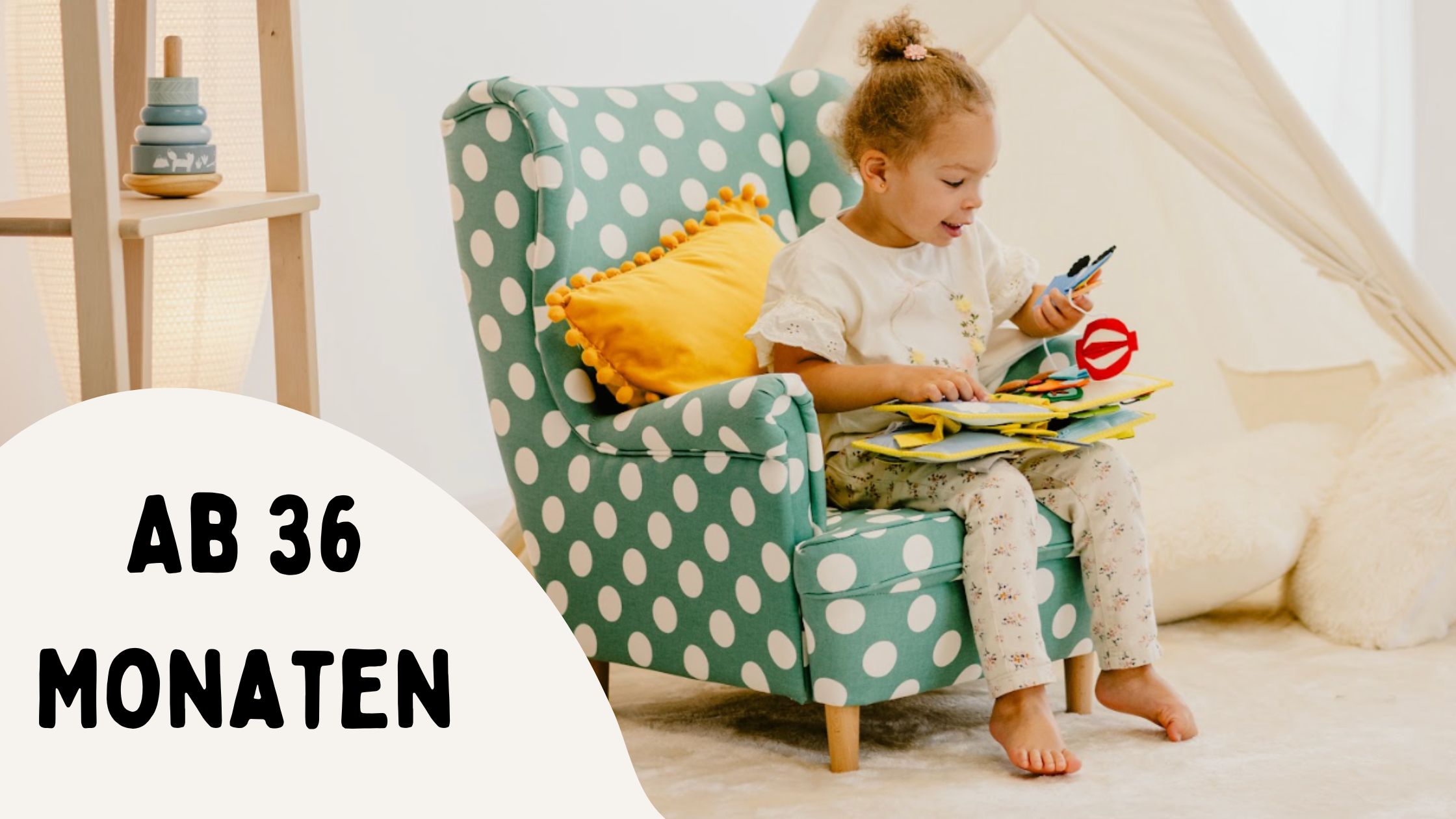
Back to Child Development 18–24 Months · On to Child Development from 36 Months

Leave a comment
All comments are moderated before being published.
This site is protected by hCaptcha and the hCaptcha Privacy Policy and Terms of Service apply.